OUR COMPANY

Please visit Spex Certiprep for all your certified reference materials and standards
The AAAS STEM volunteer program is looking for retired scientists and engineers to help K-12 science teachers make science more interesting.
Rob Thomas has been a volunteer for the past 9 years. Interested in joining the program?
OUR COMPANY
 Scientific
Writing Solutions
Scientific
Writing Solutions
An Independent Consultant Serving
the Freelance Writing Needs of the Scientific Community
1st Edition of Practical Guide to ICP-MS
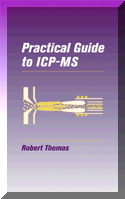
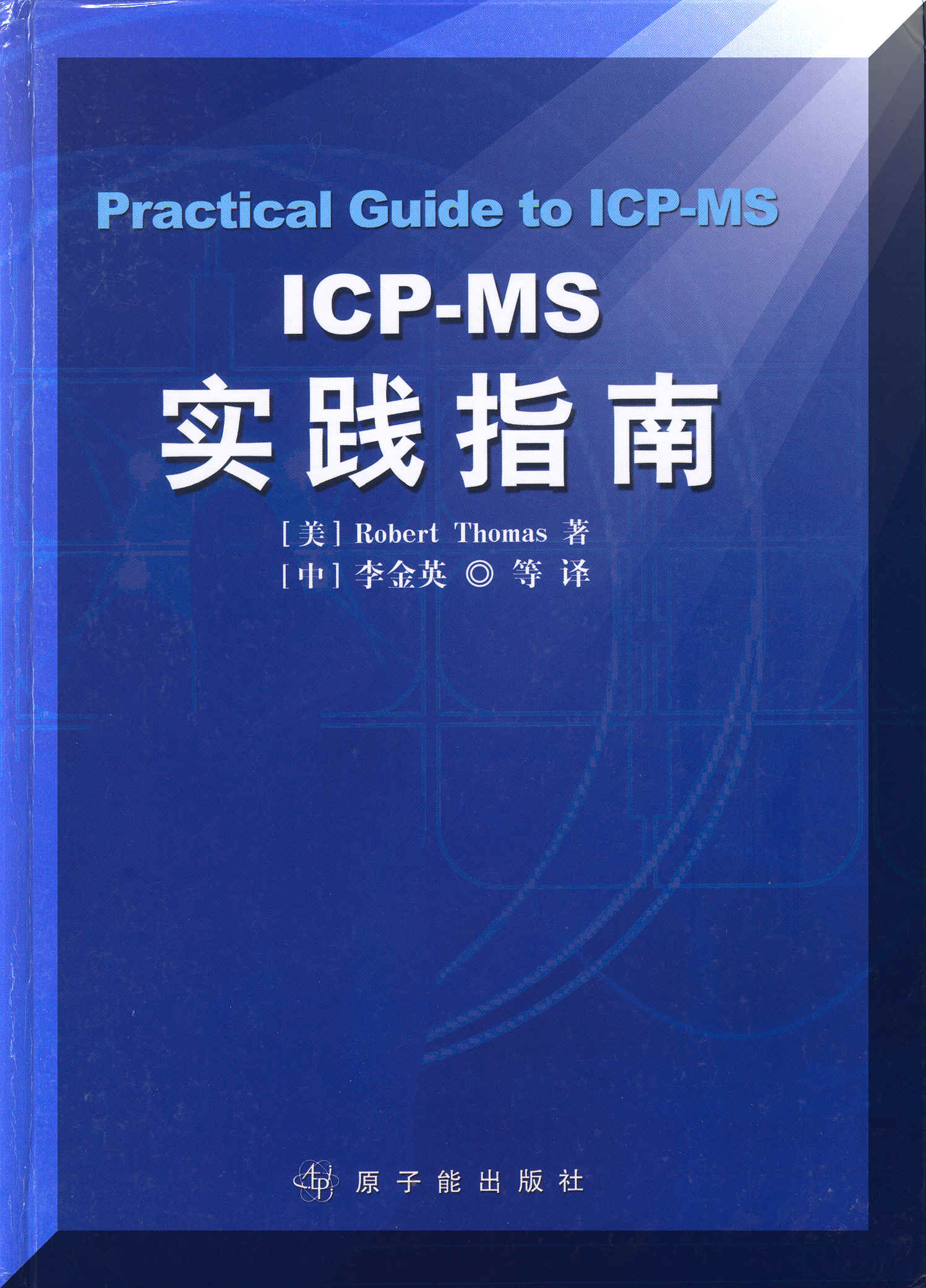
NOTE: A CHINESE (SIMPLE MANDARIN) VERSION OF THE 1st EDITION OF THE BOOK IS NOW AVAILABLE. SEE BELOW FOR DETAILS
If you want to order the "Simple Mandarin" version, you will have to contact Shuo Lui, the editor of the Chinese Atomic Energy Press based in Beijing. Contact information is given below at
Email: liushuo@nuclear.cetin.net.cn
Phone: (86)-10-68462073.
If you want more information about the contents of the English version of the book, please read on. If you want to read a brief synopsis of reviews of the book click here. For the full reviews, scroll down to the end of this page.
What Drove Me to Write This Book?
Twenty years after the commercialization of Inductively Coupled Plasma Mass Spectrometry (ICP-MS) at the Pittsburgh Conference in 1983, there are approximately 5000 systems installed worldwide. If you compare this number with another rapid multielement technique, Inductively Coupled Plasma Optical Emission Spectrometry (ICP-OES), first commercialized in 1974, the difference is quite significant. In 1994, twenty years after ICP-OES was introduced, about 12,000 units had been sold and if you compare it with the same time period that ICP-MS has been available, the difference is even more staggering. From 1983 to the present day, approximately 25,000 ICP-OES systems have been installed – about 5x more than the number of ICP-MS systems. If the comparison is made with all Atomic Spectroscopy instrumentation (ICP-MS, ICP-OES, Graphite Furnace Atomic Absorption [GFAA] and Flame Atomic Absorption [FAA]), the annual sales for ICP-MS is less than 7% of the total AS market - 500 units compared to approximately 7000 AS systems. It’s even more surprising when you consider that ICP-MS offers so much more than the other techniques, including superb detection limits, rapid multielement analysis and isotopic measurement capabilities.
ICP-MS - Routine or Research?
Clearly, one of the many reasons that ICP-MS has not become more popular is its relatively high price-tag - an ICP mass spectrometer typically costs 2x more than ICP-OES and 3x more than GFAA. But in a competitive world, the “street price” of an ICP-MS system is much closer to a top-of-the line ICP-OES or a GFAA that has all the “bells and whistles” on it. So if ICP-MS is not significantly more expensive than ICP-OES and GFAA, why hasn’t it been more widely accepted by the analytical community? I firmly believe the major reason, why ICP-MS has not gained the popularity of the other trace element techniques, is that it is still considered a complicated research-type technique, requiring a very skilled person to operate it. Manufacturers of ICP-MS equipment are constantly striving to make the systems easier to operate, the software easier to use and the hardware easier to maintain, but even after twenty years, it is still not perceived as a mature, routine tool like flame AA or ICP-OES. This might be partially true, because of the relative complexity of the instrumentation. However, in my opinion, one of the major reasons for this misconception is that there has not been a good textbook available explaining the basic principles and application benefits of ICP-MS, in a way that is compelling and easy to understand for a novice who has limited knowledge of the technique. There are some excellent textbooks describing the fundamentals, but they are mainly written or edited by academics, who are not approaching the subject from a practical perspective. For this reason, they tend to be far too heavily biased towards theory and less to how ICP-MS is being applied in the real-world.
Practical Benefits
There is no question in my mind that the technique needs to be presented in a more practical way, in order to make routine analytical laboratories more comfortable with it. Unfortunately, the publisher of the “Dummies” series has not yet found a “mass” market for a book on ICP-MS. I am being a little facetious of course, but I firmly believe that a textbook of this kind is sadly lacking from the ICP-MS reference literature available today. This was my main incentive for writing the book. However, I also felt it was important to paint a complete picture for someone who is looking to invest in ICP-MS, by comparing detection capability, sample throughput, dynamic range, interferences, operator skill level and running costs. with other common trace element techniques, like FAA, GFAA and ICP-OES. This will enable the reader to relate the benefits of ICP-MS to other atomic spectroscopy instrumentation he/she is more familiar with. In addition, in order to fully understand its practical capabilities, I also wanted to present an overview of the most common applications currently being carried out by ICP-MS and its sampling accessories - to give an overview of the different industries and markets that are benefiting from the technique’s enormous potential. And finally, having worked for an ICP-MS manufacturer for 20 years, I wanted to discuss the most important selection criteria for those of you who might be interested in purchasing the technique. In my opinion, this is a critical ingredient in presenting ICP-MS to a novice, because there is very little information in the public domain to help someone carry out an evaluation of commercial instrumentation. Very often, people go into this evaluation process completely unprepared and as a result may end up with an instrument that is not ideally suited for their needs.
The main topics presented in this book will include:
· Brief Overview of ICP-MS
· Principles of Ion Formation
· Sample Introduction
· Plasma Generation
· Interface Region
· Ion Focusing
· Mass Separation Devices
· Ion Detection
· Peak Measurement Protocol
· Common Interferences
· Methods of Quantitation
· Contamination Issues/Sample Preparation
· Routine Maintenance
· Alternate Sampling Accessories
· Comparisons With Other AS Techniques
· Common Applications
· Most Important Selection Criteria
To read the journal reviews of this book, please click here
Or if you want order the 2nd Edition of the textbook, please click here
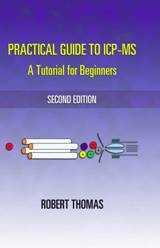
To download an informational flyer of the book, please click below:
Download informational flyer (pdf file)
Thanks for your interest.
Robert Thomas
Principal Consultant
OUR SERVICES
You are visitor number:

Register for Rob's two Short Courses at the Pittsburgh Conference in Orlando and attend his Elemental Impurities in Pharmaceuticals conferee networking session.
OUR SERVICES